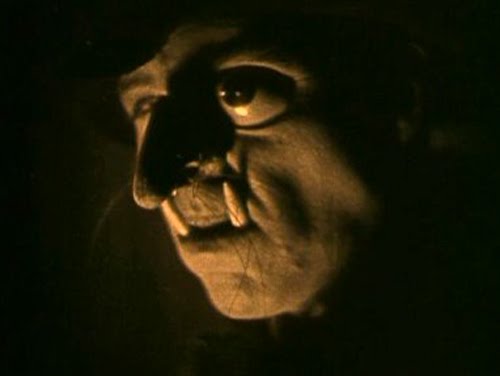
Sunday, July 3, 2011

A Study in Classic Horror- FRANKENSTEIN (1931)


I know I’ve already heaped a great deal of praise on Boris Karloff in these reviews, and I’m probably going to do a bit more here, but at least in Frankenstein we come to a film with an ensemble of memorable performances. I’ve found something to enjoy about every single movie I’ve reviewed so far, but so often in the old classics the casting is very uneven. Often they seem to be built around one or two stars that steal the production while many of the other actors practically sleepwalk through their roles. Not to say this cast is perfect. Mae Clarke, as Elizabeth, is kind of generic, and John Boles, as Victor Moritz, could have easily been written out completely without having much affect on the story, but there are so many other memorable performances it’s easy to overlook the weak links in the cast.


Colin Clive’s Henry Frankenstein is practically the consummate mad scientist. (I say “practically”, because he is due to be outdone in the sequel, but it’s too soon to get into that.) It’s a wonder that Elizabeth doesn’t break off their engagement on the spot when she, Victor and Dr. Walderman find him ranting about his experiment. His vanity is such that the second his sanity is questioned he insists the three witness the birth of his creature when seconds before he wanted to keep it a secret. Clive is almost over the top, and by the time he’s shouting “He’s alive!” and “Now I know what it feels like to be God!” he’s borderline orgasmic. Sure it seems a bit campy by today’s standards, but I’ll bet there’s many a scientist who’s had a major breakthrough that can relate to Henry’s excitement.


Other great performances: Frederick Kerr, who endows Baron Frankenstein with the demeanor of an old British colonel; Edward Van Sloan, who seems to have been relegated to the role of German mentor in many Universal monster films; the underrated actor Dwight Frye as Fritz, Henry’s sadistic hunchbacked assistant, and of course Marilyn Harris as poor doomed Maria.


And then there’s Karloff, far from his first role, this was the one that made him a star, even if he was billed simply as “?” in the opening credits. Like Chaney’s Phantom, this is another case where I wish I could witness the character’s reveal the way audiences did in 1931. It’s easy to credit Jack P. Pierce’s iconic makeup design for making the Monster memorable, but it’s Karloff’s performance that makes him menacing one moment then childlike and sympathetic the next. One need only look to one of the film’s most famous scenes to know that this role was more than stumbling around and growling. The scene between the Monster and little Maria may be one of the most finely crafted scenes in the whole Universal Horror canon. It is the one moment in the film when the Monster experiences any joy. He plays Maria’s floating flower game with the enthusiasm of an amused toddler, which is what makes the scene’s outcome so much more tragic. Yes, you feel terrible for the fate of the little girl, but you also feel for the Monster and his lack of understanding of what he’s done. Curiously, the scene was censored for years, instead of ending with Maria being tossed in the water and the Monster running away confused, it ended with him grabbing her as she screams “You’re hurting me.” Leaving Maria’s fate to the audience’s imagination made it seem worse than was originally intended and probably made it harder to sympathize with the Monster, especially later on as her near catatonic father carries her limp body through the village streets.


Much of why the film works so well is probably due to the director, James Whale. Whale took on the film because he wanted to break free of the war films he’d become associated with, and ironically today he is best remembered for his horror films. Some of Whale’s trademarks are already apparent here, such as his dark sense of humor and his affection for older British character actors, like Kerr, in this case.


Now, I can’t ignore the fact that the story bears little resemblance to Mary Shelley’s novel. In the film Dr. Frankenstein shuns his creature when he beings to show violent tendencies, in the novel it’s merely because he’s ugly. In the novel, the Monster learns to speak and therefore articulates his misery, while the film only gives us precious glimpses at why we should sympathize with him. (Hats off to Karloff and Whale for making it work.) In fact, I’d say Dr. Frankenstein is the bigger monster in Shelley’s book, which was probably her comment on how superficial people can be. The movie seems far more concerned with entertaining than making a statement. I’m not criticizing here, I’m just observing. I love both works for different reasons. The two have become intertwined; the scarred creature with the flattened head and electrodes in his neck has become the image of Shelley’s Creature in our collective subconscious. I’m sure that’s how most people imagine the Creature when they read the novel, even if they’ve never seen the movie. One work manages to fuel interest for the other.


This week’s supporting features:

Bosko in the Looney Tunes short Congo Jazz (1930)

The Our Gang short When the Wind Blows (1930)

Next week’s film:

The Inner Sanctum mystery Calling Dr. Death (1943) starring Lon Chaney Jr., Patricia Morison and J. Carrol Naish

Sunday, June 26, 2011

A Study in Classic Horror- THE PHANTOM OF THE OPERA (1925)


As I prepared to watch The Phantom of the Opera, I realized I had a conundrum on my hands. The DVD set I purchased contained two different cuts of the film. One was the original 1925 version; the second was a restoration of the 1929 version which featured new footage, sound and some color, which to choose? So, I looked to the internet for advice. The majority recommended the 1929 version, but those that preferred the 1925 made a strong case for it. I tried to imagine having only seen the special editions of the Star Wars movies without having ever seen the originals, and I just couldn’t, so I decided the best approach was to watch both versions, and I’m glad I did.


For future viewings, I wish I could somehow combine what I liked best about the two. There’s no arguing that with the restoration, the later cut certainly looks better, yet some of the revisions are rather awkward. I could have done without the dubbed over dialogue. I don’t know how much of the original cast was brought in to add vocals, but it doesn’t matter when they can’t possibly sync up with the mouth movements (if any) onscreen. Worst of all, as Lon Chaney was contracted to a different studio when the revisions were made, a different actor is heard when the Phantom speaks, and I don’t particularly care to see Chaney’s performance tarnished by someone else’s. On the plus side for the later version, the rearrangement of some scenes makes them work better dramatically, for example: the murder of a stagehand occurs much later in the ’29 than in the ’25, and as this death is the catalyst for the mob in the film’s climax, the flow of murder to mob is more organic than the broken up series of events in the ’25. Best of all visually, is the early Technicolor sequence, particularly the scene where the young lovers plot their flight from Paris on the roof of the Opera House unaware of the disguised Phantom watching from above as his bright red cloak flaps in the breeze against the night sky.


There is a third way you can watch the film in this set. There’s an alternate orchestral score, written more recently, to accompany the ’29 version. This replaces the entire soundtrack and therefore eliminates the clunky dialogue, but it also eliminates the operatic performances that were added. Ideally, I would want to keep the singing, but lose the dialogue, but that’s not possible. I guess there’s no perfect way of watching the film, so I guess in the future I will settle for the ’29 cut with the newer score.


But those are just my thoughts on the edition of the film, on to the film itself. Phantom is one of those films I wish I could experience the way the original audiences did. The scale of the film itself is a remarkable for the time it was made in with its enormous sets and hundreds of extras, but most of all I wish I could feel the thrill the early audiences felt when Mary Philbin unmasks the Phantom to reveal Lon Chaney’s grotesque make-up. When promoting the film, Universal kept Chaney’s make-up a secret, (see the trailer in my previous entry) so when that mask came off people were seeing it for the first time. I remember seeing that clip when I was very young and finding it frightening, but by then photos of the Phantom were in wide circulation. I’m sure little compares with the impact the unmasking had on those first audiences.


A great performance by Chaney is adequately supported by Mary Philbin and Norman Kerry as Christine and Raoul. Arthur Edmund Carewe as the mysterious secret policeman Ledoux is another notable performance. There’s a bit of gasping for breath as Kerry and Carewe find themselves ensnared in some of the Phantom’s death traps.


Oh, and since I’ve often discussed clichés: according to Michael Mallory’s Universal Studios Monsters: A Legacy of Horror, this film marks the first use of the angry mob, which would become a horror movie staple.

This week’s supporting features:

Bugs Bunny in Herr Meets Hare (1945)

The Our Gang short The First Seven Years (1930)

Next week’s film:

Frankenstein (1931) starring Boris Karloff, Colin Clive, Dwight Frye and Mae Clarke

Sunday, June 12, 2011

A Study in Classic Horror- MURDERS IN THE RUE MORGUE (1932)


As much fun as I’m having watch these old classics, I have to admit it’s a lot harder to be as frightened by them as I might have been when I was eight. I have been wishing for one of those moments when I am held completely in suspense as the actions on the screen unfold. I didn’t quite get there yet with Murders in the Rue Morgue, but it was the first time I found elements of the film truly disturbing.


This film may have more in common with its source material than the other recently-viewed Poe adaptation, (1935’s The Raven) but the resemblance is largely superficial. Unlike the short story, the film does away with the idea of building up to the revelation of the killer in favor of showing us the villainous machinations that lead up to the murders.


Bela Lugosi’s Dr. Mirakle is a madman who flaunts his pre-Darwin evolutionary theories while exhibiting his gorilla, Erik, in a travelling carnival. For reason known only to him, he dreams of creating a gorilla / human hybrid, and he attempts to reach his goal by kidnapping women and injecting them with Erik’s blood. In quite a brutal scene, a woman is strung up by her arms as Mirakle observes the effects of the gorilla blood on her system; he screams at her for disturbing his studies by moaning and pain, and when she dies he briefly shows something resembling remorse by making the sign of the cross before summoning his servant to “get rid of it” by dumping her into the river. Unsettling to watch, and according to the trivia page for the film's imdb entry, much of the original footage was censored. Later on, knowing what Mirakle is capable of makes his creepy stalking of the lovely Camille, the girl he believes will be the perfect match for Erik’s blood, all the more menacing.


Another riveting performance by Lugosi in downright demonic hair and make-up and some stunning art direction and camera work make it easy to overlook the film’s less impressive elements. Sidney Fox’s charming portrayal of Camille L'Espanaye is awkwardly offset by Leon Ames’ (billed as Leon Waycoff) dull take on Pierre Dupin. (Dupin, a man of Holmes-like reasoning in Poe’s story, is here a student with a knack for putting two and two together.) Erik, the gorilla, is clearly played by a costumed actor in the wideshots and by a chimpanzee in close-up. (In fact, the ape in the original story is an orangutan.) Yet the film is always visually impressive with expressionistic sets and frightening scenes played out in nightmarish shadow. However, there was one scene where the artful camera work left me feeling a bit queasy and it had nothing to do with mad scientists or killer apes. At a picnic where Pierre pushes Camille on a swing, the camera stays with her, so that the background swings in and out of frame while Camille stays in focus. (But my rum and Coke might be more to blame for the disorientation than the camera work.)


Lugosi makes a great madman, but I hope somewhere in my list of film he gets to play someone likable as Boris Karloff finally got to do in Night Key. He got to play sympathetic in his brief role in The Wolf Man, and I believe we’ll see him in more sympathetic roles in the later Frankenstein films, but just once, I’d like to see him do heroic.

This week’s supporting features:

Bugs Bunny and Yosemite Sam in Hare Trigger (1945)

The Our Gang short Shivering Shakespeare (1930)

I’m taking next week off for my wedding anniversary, the following week’s film will be:

The Phantom of the Opera (1925) starring Lon Chaney and Mary Philbin

Saturday, June 4, 2011

A Study in Classic Horror- HORROR ISLAND (1941)

Another haunted house comedic thriller, and while it’s not as cleverly executed as The Cat and the Canary from a couple of weeks ago, it contains surprisingly fewer clichés. Oh, it’s got secret passages, a hand that reaches out and pulls someone into a wall, and another Scooby-Doo miscreant, but it’s also got a few twists I didn’t see coming and an impressive parade of character actors.


The plot feels like an early draft for the Gilligan’s Island pilot: an assortment of diverse characters on a recreational mini-cruise, only this time there’s a spooky castle and the possibility of buried treasure. For Bill Martin and his sidekick Stuff, it’s a chance to give gullible tourists a cheap thrill and pocket their money, but for their recent acquaintance Tobias, it’s a quest for real treasure. Throw in a competitor for the treasure known only as the Phantom, and of course, things start to go awry.


Dick Foran and Peggy Moran, who were paired the previous year in The Mummy’s Hand, do a fine job of leading the cast. They’re no Hepburn and Tracy, but they do fairly well with the witty banter that leads to them falling in love for no reason, as is typical in films of this era. (Too bad the partnership didn’t continue “Foran and Moran” has such a nice ring to it.)


Then there’s the supporting cast. I’ve always had a fondness for great character actors, and it seems like there’s always more to discover. Fuzzy Knight plays Stuff, the archetypal gruff but kind sidekick; Leo Carrillo is the colorful Tobias, Hobart Cavanaugh returns from Night Key as a mousy historian and Walter Catlett plays an inept police sergeant. These were the most notable performances, but the motley crew of passengers is rounded out nicely with John Eldredge, Lewis Howard, Ralf Harolde and Iris Adrian. And I shouldn’t forget Foy Van Dolsen and his turn as the Phantom.


There’s not that much more to say. It’s not exactly the makings of a classic, but it’s a fun romp, and for a movie that was filmed and released in less than a month, it holds up pretty well.


This week’s supporting features:

The Looney Tunes cartoon Alpine Antics (1936)

The Our Gang short Moan and Groan (1929)

Next week’s film:

Murders in the Rue Morgue (1932) starring Bela Lugosi and Sidney Fox

Sunday, May 29, 2011

A Study in Classic Horror- THE MUMMY (1932)

I’ve only seen The Mummy once before, when I was still pretty young, and I remember being disappointed when I learned that the creature in bandages I’d seen on posters and merchandise all my life was only present in the film’s short prologue. Times change, and now I’m glad that Boris Karloff didn’t spend the entire film covered in heavy make-up. Karloff owns this movie. He delivers another great performance and it feels like all the rest of the cast can do is stay out of his way. Don’t get me wrong, The Mummy is a classic and deservedly so, but I think the weight of its enduring qualities rests firmly on Karloff’s shoulders. Whenever he wasn’t onscreen, I was eagerly waiting for him to return.

The rest of the cast really falls flat when compared with Karloff. Female lead Zita Johann, as Helen Grosvenor, doesn’t have much appeal in her role, and the rest of the cast really doesn’t offer much that is memorable. The only other performer to exhibit any energy is Bramwell Fletcher, and we only see him in the opening sequence.


What really struck me was how closely this movie parallels Dracula. I don’t know that it was intentional, but I wonder if the success of the Bela Lugosi outing two years earlier led the filmmakers to think they could make lightning strike again. (Which, of course, it did.) Like Dracula, Karloff’s Imhotep, in the guise of Ardath Bey, is an ancient immortal who uses his hypnotic powers to seduce a young woman to join him at his side for eternity , and both characters’ eyes glow eerily when they hold a victim in thrall. The director, Karl Freund, was cinematographer on Dracula, and the screenwriter, John L. Balderston, wrote the stage play that version of Dracula was based on. Strangest of all, Edward Van Sloan and David Manners, who played Van Helsing and John Harker respectively in Dracula, play virtually the same roles as Dr. Muller and Frank Whemple in The Mummy.


A couple of other observations: I really like how the flashback sequence resembles a silent movie; it reminds of how a modern color film might similarly use black and white footage. I was also curious about how limited the use of music was. Music from Tchaikovsky’s Swan Lake plays over the opening titles, and then we don’t hear any scoring until about midway through. I know many early sound films had no score whatsoever, but I also know that music was a part of film even in the silent era when most movie houses had live piano accompaniment for their features. I wonder exactly when it was that musical scoring became a staple for the movies.


Overall, I’ve probably given the impression I didn’t enjoy The Mummy, and that’s not true at all. I just think it’s a good example of how important casting can be. I’m seeing many of the films on my list for the first time, and others I’m seeing for the first time in years. I’ve idolized horror icons like Boris Karloff and Bela Lugosi all of my life, and in some ways it’s because many of their roles have become bigger than the films and the actors themselves. This is the third Karloff film I’ve watched since I began this project and I’m finally beginning to see what a genuinely talented actor he was. In three films I’ve seen three very different Karloffs. The Mummy certainly deserves its place among the Universal horror pantheon, and I believe it has Boris Karloff to thank for it.


This week’s supporting features:

The Merrie Melodies cartoon Bacall to Arms (1946)

The Our Gang short Bouncing Babies (1929)


Next week’s film:

Horror Island (1941) starring Dick Foran, Leo Carillo and Peggy Moran


Sunday, May 15, 2011

A Study in Classic Horror – THE CAT AND THE CANARY (1927)


Once again, we return to early versions of clichés we’ve know for ages. Based on a popular stage play of the era, The Cat and the Canary is a comedic haunted house thriller based around the now-familiar motif: the reading of the rich relative’s will to his horde of greedy relatives. Other familiar elements include: secret passages, an escaped lunatic, a cut telephone line, a creepy claw that reaches out of walls, a body that tumbles out of a closet and one more cliché that I’ll discuss later. The only thing missing: the painting of the late Cyrus West is lacking a pair of eyeholes that allow an unseen spy to watch the proceeding of the room. Still, there are other haunted house movies to come, perhaps we’ll get to that one later. Clichés they may be, but as I stated in my entry on The Raven, there’s a lot of fun to be had in seeing them in some of their earliest realizations.

As is usually the case when you inherit a fortune from someone who owns a spooky house, you must spend the night in said house. In this instance, however, that is not a stipulation of the will, this time Annabelle, the chosen recipient of the fortune, and the other relatives must stay the night because of the danger of the aforementioned escaped lunatic. As the reluctant inhabitants of the house begin to disappear and strange occurrences seem to center only around Annabelle when she’s alone, her sanity begins to come into question, and by the conditions of the will, she must be certified sane by a physician or the money will pass to another specified heir

I’M GOING TO DISCUSS A REVEALING PLOT POINT HERE, SO YOU MAY WANT TO SKIP THIS PARAGRAPH IF YOU HAVEN’T SEEN THE FILM. As you may have guessed, every thing is eventually explained as the machinations of the heir who the fortune will fall to if Annabelle is declared insane, and that’s the final cliché I want to discuss: what I’ve come to call the Scooby-Doo villain. Anyone who’s watched cartoons since the late sixties is familiar with the idea of the miscreant who dresses up as a monster as a means to achieve his goal, usually preying on local superstitions or, as in this case, trying to drive someone mad. It’s amusing to see this idea dates back long before such villains could be foiled by a gang of teenagers and their dog. There’s even a very Scooby-esque unmasking of the culprit. I wonder if there have been many real-life criminals who have used this technique.

The film has a great cast that includes the lovely Laura LaPlante and Gertrude Astor, Creighton Hale as the nebbish hero, Flora Finch as a doddering aunt who bears an uncanny resemblance to Jean Stapleton, and Martha Mattox as a creepy maid called Mammy Pleasant who could give lessons to Rebecca’s Mrs. Danvers. But the real star is the director: Paul Leni. This was my introduction to Leni, a German expressionist who made his American debut with this film. Though it’s often very funny, Leni never lets go of the thriller aspects of the film with its dark moving shadows, slow tracking shots down darkly lit halls and long curtains that blow eerily in the wind. He also makes some dramatic use of superimposed shots. The film opens with a shot of the huge and imposing mansion with a distraught Cyrus West superimposed over it. As we are told of his greedy relatives waiting for him to die, the mansion is replaced by empty medicine bottles and menacing cats pawing at poor Cyrus. Later a scary skull looms over a character’s head when he blanches at the word “death”. Leni even extends his touch to the dialogue cards as the words become large and animated when a character is frightened. This also may be the earliest example I’ve seen of stylized credits: the first visual in the film is that of a gloved hand reaching past cobwebs to wipe away a thick layer of dust to reveal the film’s title.

It makes me look forward to Leni’s other film on my list, The Man Who Laughs. It’s sad that he died in 1929 at the age of 44. I would love to have seen what he might have done with sound and color.

This week’s supporting features:

Bugs Bunny and Witch Hazel in Bewitched Bunny (1954)

The Our Gang short Boxing Gloves (1929), the first short in the series to feature Jackie Cooper, who passed away earlier this month.

I’m not sure when I’ll get to the next film. Probably May 27th at the latest, so I’ll leave the schedule open for the next couple of weeks. The film in question will be:

The Mummy (1932) starring Boris Karloff and Zita Johann

Sunday, May 1, 2011

A Study in Classic Horror - NIGHT KEY (1937)

What I create, I can destroy.

It sounds a bit ominous, doesn't it? As if poor David Mallory has finally been pushed over the edge, but Boris Karloff is actually playing the hero for a change.

Night Key is the first film I'm likely to be called out on in my study. No, it's definitely not a horror film and it just barely qualifies as science fiction. When I scanned the index of Michael Mallory's book on Universal horror I found that it's not even mentioned. In fact I guess it only made my list because of its inclusion in the Boris Karloff Collection DVD set, the cover of which promises "The Master of Horror in His Most Frightening Roles!" Still I'm glad it made the list because it's a film that any fan of Karloff and classic horror should take a look at if they'd like to see the range that Boris Karloff had.

An early take on the Little Man vs. Big Business motif, Night Key is the story of inventor David Mallory, who created a near flawless security system only to have the patent stolen from him by Steven Ranger, his former rival for his late wife. Twenty years later, Mallory invents a new system that will render the previous one obsolete, but Ranger connives with a crooked lawyer to lure Mallory into signing over the rights to the new system with no intention of actually implementing it. But Mallory has also invented a device that can disrupt the old system, and with the aid of a smalltime hood named Petty Louie, sets off on a gleeful spree of breaking and entering to demonstrate to Ranger just how valuable his ingenuity is to this business equation, always leaving his calling card: "What I create, I can destroy -Night Key".

I warmed to Karloff's Mallory the second I saw him. His first moment of screen time features him tinkering with his new invention with a look of pure joy on his face, as if he creates and perfects for the pleasure in it rather than out of greed. Yes, he'd like to make money off of his invention, after all he's slowly going blind and shares a tiny apartment with a daughter who's stuck in a dead-end job, but the good his invention will do is just as important to him. His moral lapse into breaking and entering is strictly to teach the greedy a lesson. He never steals from the burgled businesses. And when a local crime syndicate takes notice of his escapades and begins to use him for more nefarious purposes, he does his best to sound the alarm, even when that bring him and his daughter under threat.

Karloff is charming as Mallory. It really is refreshing to see him free of heavy prosthetics playing an outright likable, good humored yet still sympathetic character; a scientist, but not a mad one. At the time this was made, Universal was considering phasing out horror, Karloff was probably cast mainly out of contractual obligations, and despite my affection for the old fright flicks, I wonder what else we might have seen from Karloff had the genre not seen a resurgence at the studio. It's a pity we can never revisit Karloff's stage roles.

A rather good supporting cast: again the compulsory young lovers don't offer a lot to the story, but Jean Arthur as Mallory's daughter Joan and Warren Hull as a hotshot security employee do well with the material at hand. Samuel S. Hinds as Steven Ranger has a bit more dimension than he did in last week's outing The Raven. The group of thugs led by Alan Baxter as "The Kid", while well played, are a prime example of how screen criminals have changed over the years, it's hard to watch them and not think of Rocky and Mugsy of Looney Tunes fame. Last but not least, we have Hobart Cavanaugh as Petty Louie, the small time hood with the heart of gold, who delivers the second-most memorable performance in the film as its comic relief.

In defense of its inclusion here, you can certainly see attempts have been made to sell it as a horror film, and I guess those attempts resonate to this day, if the aforementioned box set can be used as an example. Take a look at these other promotional posters, both using pictures of Karloff from other films. The second one makes a blatantly erroneous promise of "Murder in a Wax Museum". Yet I'm grateful, for without those misleadings I might never have seen it; it may not be a horror film, but I highly recommend it to the classic horror aficionado.

Rounding out this week's bill:

Bugs Bunny and Yosemite Sam in 14 Carrot Rabbit (1952)

The Our Gang short Lazy Days (1929)

I'll be taking a break next week. Got a wedding to go to. Then it's a Friday the 13th weekend with:

Paul Leni's The Cat and the Canary (1927) starring Laura LaPlante, Creighton Hale and Forrest Stanley